
 Sofia Martin
 Every season, athletes appear to move faster, jump higher, and recover quicker than they did in the previous season. Fans usually think that it is merely talent or hard training, but there are probably more things that go on behind the scenes. There has been another type of approach that is gaining momentum lately. Neither is it some sort of secret supplement or a flashy machine. It is instead concerned with the reaction of the body towards well-thought-out bursts of activity followed by accurate recuperation. It has been experimented with by some coaches and it seems that athletes are intrigued. It may not be a substitute for the conventional workouts but it may complement them in fascinating ways. The concept is easy, but the action is deliberate and consistent.
The real meaning of this training hack

The so-called hack is commonly referred to as the complex training or the contrast training. It entails the combination of heavy strength exercises with fast-paced, explosive exercises. This can be aimed at stimulating the nervous system to increase the intensity of muscle contractions.
The science of explosive effort

It is somewhat argued that the intense short-term workouts can activate fast-twitch muscle fibers. These fibers are, in most cases, linked with speed and power. Through a specific form of training, athletes may experience acceleration and rapid motions.
How contrast training works

The technique will usually involve a heavy lift followed by a lighter and faster movement. As an example, a squat could be succeeded by a jump. The excessive weight might preload the muscles and perhaps enable the explosive movement to become more forceful.
Nervous system activation

Coaches occasionally refer to the training of the nervous system and not only of the muscles. The bursts of hard labor can stimulate improvements in communication between the brain and the body. This association may later turn into more keen responses.
Speed development focus

Athletes of the sports that require sprinting or the change of direction instantly tend to seek an advantage. Such a form of training may assist faster departures. It is not magic, but it may perfect the manner in which power is made.
Strength and power together

Conventional exercise develops muscle and strength. The explosive exercises are emphasized on speed. The mixture of the two can be a middle ground in which athletes can train both inside a single session, which, perhaps, would result in performance that is more rounded.
Recovery is part of the hack

The intervals of rest are typically deliberate under this method. The athletes do not have to run in between sets and usually take time to rest adequately. This could enable every explosive movement to remain sharp and in control.
Injury risk considerations
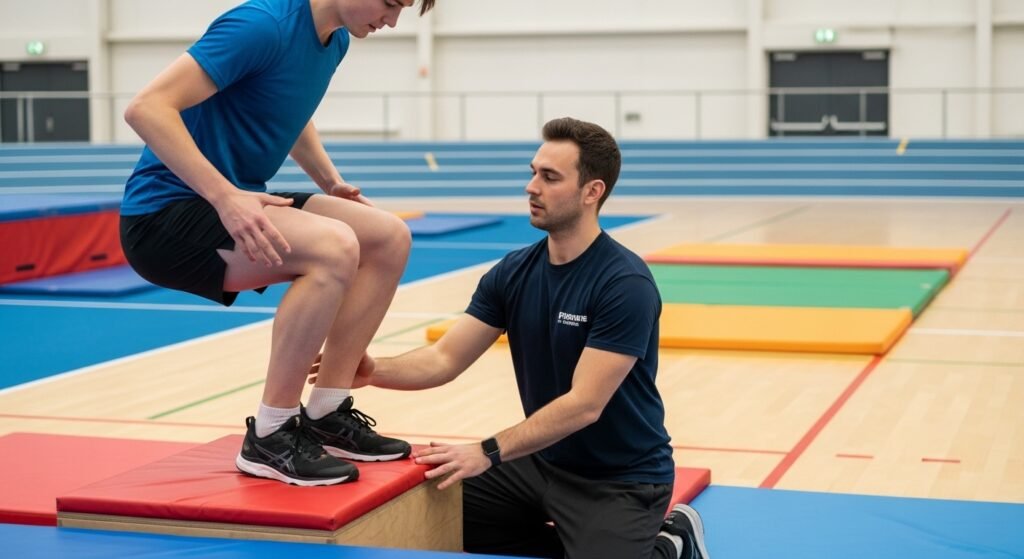
Form and supervision are important, as with any form of intense training style. Such explosive exercises can become more stressful when there is a hurry or when they are not done carefully. Various coaches seem to implement the approach over a period in order to minimize possible risks.
Application across sports

Basketball and track and field: the variations of this training method are under consideration. The sport has a slight variation. The principles are also the same, with exercise potentially varying depending on the requirements of certain movements.
Not just for professionals

Pro athletes usually make use of new techniques first, but recreational lifters sometimes use modified ones. Smaller variations could provide the same advantages without excessive loads and intensity with proper guidance.
Blending with traditional training

The majority of the athletes do not give up on their routines. Rather, this breach happens to be incorporated in existing programs. It can be both supplementary and alternative to endurance, skill training, and stationary strength training.